/Gen%20Z%20Doesnt%20Need%20a%20Different%20Leader_Hero%20Image_1200x500px.jpg?width=1080&name=Gen%20Z%20Doesnt%20Need%20a%20Different%20Leader_Hero%20Image_1200x500px.jpg)
Many organizations assume Gen Z needs a completely different kind of leadership.
It sounds plausible. Younger employees are often described as more purpose-driven, clearer about what they expect, and less willing to accept vague leadership. From there, it is easy to land on a simple conclusion: if the workforce is changing, leadership must change completely too.
But that conclusion is too simple.
Our analysis points in a different direction. The real question is not whether Gen Z needs its own leadership model. The real question is whether employees feel the leadership they receive actually works for them. Across generations, that is what matters most for satisfaction and engagement.
Key takeaway: Good leadership is not about leading a generation. It is about leading the person in front of you.
Jump to:
- Do Younger Employees Actually Experience Different Leadership?
- Which Leadership Styles Create the Highest Satisfaction?
- What Matters Most for Engagement: Leadership Style or Leadership Fit?
- Which Leadership Styles Should Leaders Avoid?
- What Should Leaders Do Differently Now?
- What this means for HR
- Method
- Final Takeaway
Do Younger Employees Actually Experience Different Leadership?
Across generations, two leadership styles stand out as the most common: visionary and distributed leadership.
There is one result worth paying attention to. Gen Z respondents are more likely than other generations to report receiving visionary leadership. That pattern remains even when controlling for country, education, seniority, role, contract type, company size, and industry.
Still, that does not mean Gen Z needs more visionary leadership by default.
A possible explanation is context. Younger employees are often earlier in their careers and may be more likely to encounter leaders who spend time explaining purpose, direction, and connection.
So yes, there is a difference. But the data does not show that Gen Z requires a distinct leadership model.
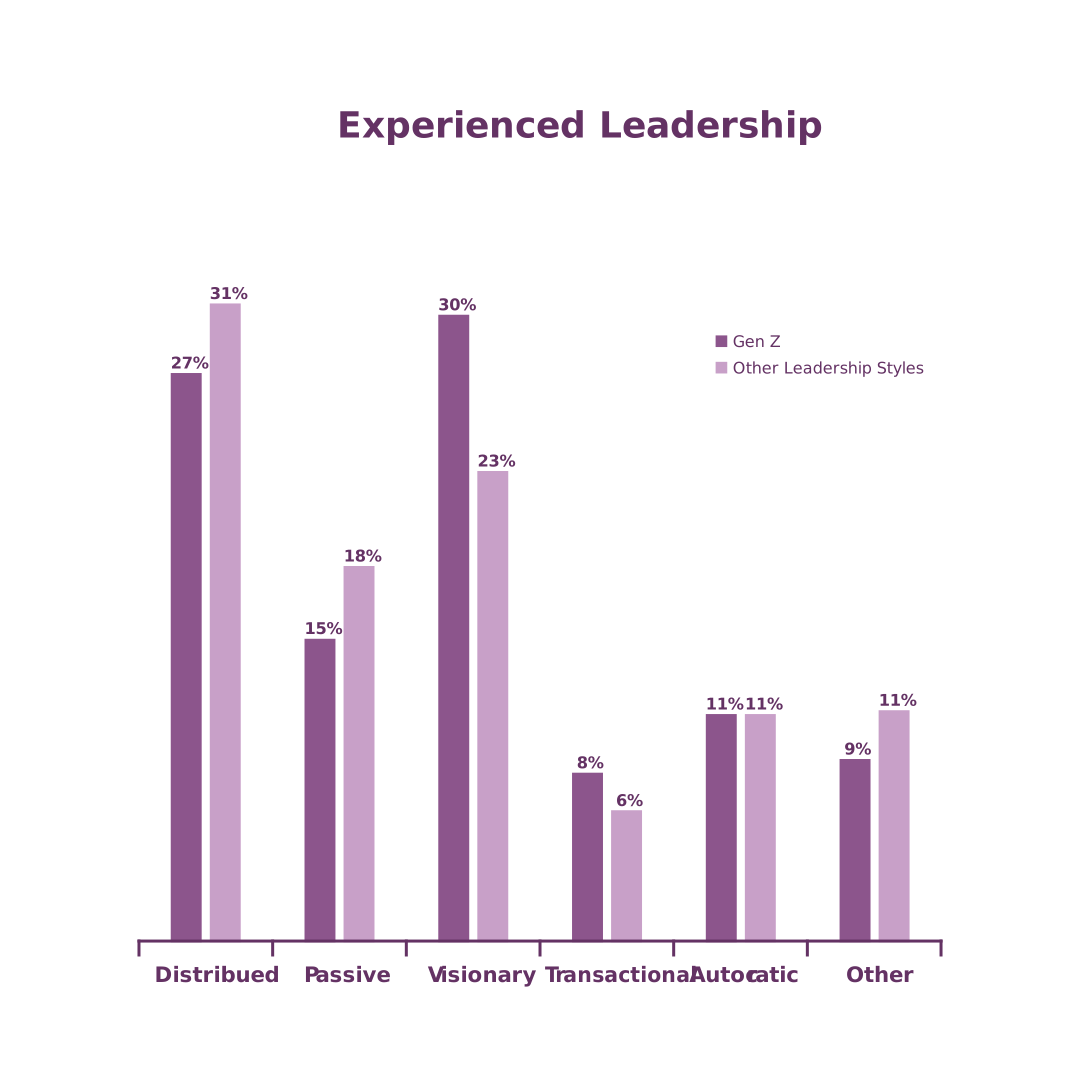
Figure 1.
Gen Z employees are more likely than other generations to report visionary leadership,
though context and career stage, not generation, appear to explain the difference.
Which Leadership Styles Create the Highest Satisfaction?
It is one thing to ask which leadership styles are most common. It is far more useful to ask which ones employees are actually most satisfied with.
Here, the pattern is clear. Satisfaction is highest under distributed, visionary, and transactional leadership. It is lowest under autocratic leadership, and passive leadership also performs poorly.
What about Gen Z?
Overall, Gen Z does not differ much from other generations in leadership satisfaction. There are a few smaller patterns worth noticing. Gen Z appears slightly less satisfied with distributed leadership, which may suggest that shared responsibility works best when it comes with clear direction. Gen Z also appears slightly less dissatisfied with passive leadership than other generations. Even so, satisfaction with passive leadership is still clearly lower than under distributed, visionary, and transactional leadership. For Gen Z, 54% are satisfied with passive leadership, compared with 77% to 92% under those three styles. Autocratic leadership remains the weakest option overall in terms of satisfaction.
That matters because it shifts the conversation. The point is not that younger employees want something entirely new. The point is that vision works better when it is backed by structure. Inspiration matters. So do priorities, expectations, and next steps.
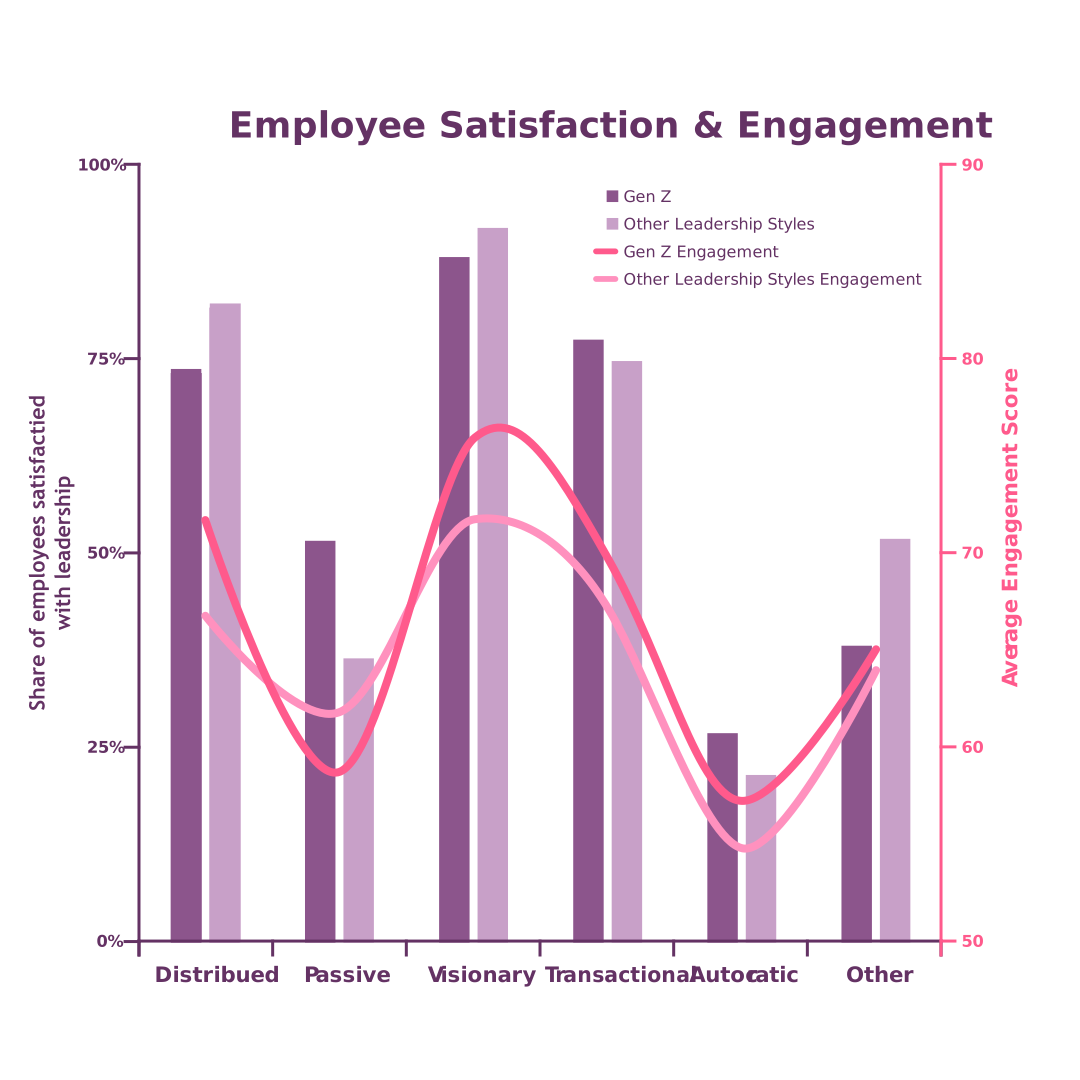
Figure 2. Leadership satisfaction varies more by leadership style than by generation. Distributed, visionary, and transactional leadership show the highest satisfaction overall, while autocratic leadership scores lowest across generations.
What Matters Most for Engagement: Leadership Style or Leadership Fit?
This is the most important finding in the analysis.
Employee engagement is more strongly associated with satisfaction with the leadership employees receive than with leadership style alone. When leadership feels relevant and supportive, engagement stays high. When it does not, engagement drops sharply.
That is the real headline.
Visionary leadership stands out as a strong all-round style. It is generally linked to higher engagement, even among employees who are less satisfied. But the broader point still holds: no style is strong enough on its own if employees do not experience it as useful.
There are also signs that when Gen Z employees are dissatisfied, engagement may drop slightly more under some styles, especially visionary and transactional leadership. That does not mean Gen Z is more dissatisfied with those styles than other generations. It means that when dissatisfaction is present, the engagement dip may be a bit sharper. But those differences do not reach statistical significance, so they should be treated as directional, not definitive.
For leaders, that is a helpful correction. The job is not to lead by stereotype. The job is to make leadership land well.
Which Leadership Styles Should Leaders Avoid?
Some styles stand out for the wrong reasons.
Passive and autocratic leadership are linked to the lowest satisfaction. And when satisfaction drops, engagement tends to fall with it. That pattern shows up across generations.
This matters because poor leadership is not experienced as theory. Employees feel it in everyday work. It shows up as unclear priorities, weak follow-up, limited support, or decisions handed down without dialogue. Over time, that turns into frustration, distance, and lower motivation.
Leadership development should therefore focus less on generational labels and more on the behaviors employees experience in everyday work. Explore how Leadership Development can help leaders build the clarity, adaptability, and follow-up skills needed across different employees and situations.
What Should Leaders Do Differently Now?
So what does the data actually support?
It supports something more useful: leadership fit.
Here are three practical implications for leaders and HR teams.
-
Make leadership fit part of everyday leadership. Do not assume employees of the same age want the same thing. Ask what support they need right now. One person may need direction. Another may need more autonomy. A third may need more frequent follow-up. Small adjustments can change how leadership is experienced.
-
Combine vision with clarity. Visionary leadership performs well in the analysis, but vision works best when it is backed by clear priorities, milestones, and expectations. Purpose matters. And it lands better when people also know what to do next.
-
Replace passivity with visible follow-up. Silence is not neutral in leadership. Short check-ins, concrete agreements, and small visible actions help employees feel supported and reduce the risk of drift. This matters even more in teams where motivation is already under pressure. Most organizations already collect feedback. The harder part is acting on it in ways employees can actually feel.
When leadership feedback points to more serious challenges, HR may need to provide leaders with additional support to understand the results and decide what to change.

From Low Scores to Leadership Success
Low engagement scores don't fix themselves. This guide shows HR teams and leaders how to identify the root cause, have the right conversations, and take action that actually creates change.
What this means for HR
For HR and People & Culture teams, the message is straightforward.
The challenge is rarely just to collect more feedback. In many organizations, that part is already in place. The harder part is helping leaders turn insight into everyday action.
That is where leadership support matters most. Not as theory. Not as labels. But as better conversations, clearer follow-up, and more practical support for leaders who need to adjust how they lead.
This is also where survey data becomes most valuable. Not as a score in a dashboard, but as a starting point for better decisions.
Method
This analysis is based on Ennova’s 2025 Panel Survey of 3,000 respondents in Denmark, Sweden, and the Netherlands. After excluding respondents who selected “Don’t know / Prefer not to answer” on leadership style and excluding Baby Boomer respondents, the final analytic sample was N = 2,158.
The analysis combines descriptive statistics, linear probability models, and linear regression models with interaction terms. Models control for gender, country, educational level, seniority, managerial responsibility, contract type, company size, and industry.
Across analyses, most observed differences for Gen Z do not reach statistical significance.
Final Takeaway
The idea that Gen Z must be led in a completely different way does not hold up well in the data.
What matters more is whether leadership feels right to the employee receiving it.
So the better question is not, “How do we lead Gen Z?”
It is, “How do we help leaders create clarity, support, and follow-up for the people they lead?”
That is a much better place to start.