/EX-blog%20Does%20Proximity%20Improve%20Employee%20Engagement_Hero_1200x500.jpg?width=1080&name=EX-blog%20Does%20Proximity%20Improve%20Employee%20Engagement_Hero_1200x500.jpg)
Does it matter where your people sit? We looked at nearly 43,000 employees across 20 organizations and 8 industries to find out.
The answer might surprise you.
Teams that sit together are not more engaged. Employees who work alone at their location often score highest of all. And sitting next to your manager does not consistently improve the experience of work.
What does move the needle? Leadership quality. Clarity. Follow-up that actually reaches the people who need it.
In most organizations, listening is not the challenge anymore. Turning what you hear into action is.
Are Distributed Teams Still the Exception?
No. They are part of everyday working life.
In our data, 49% of employees are not part of a one-location team. That is not an edge case. It is the norm. And if your leadership practices still assume that real teams sit together, you are only working with half the picture. That is why hybrid work leadership matters more than office presence alone.
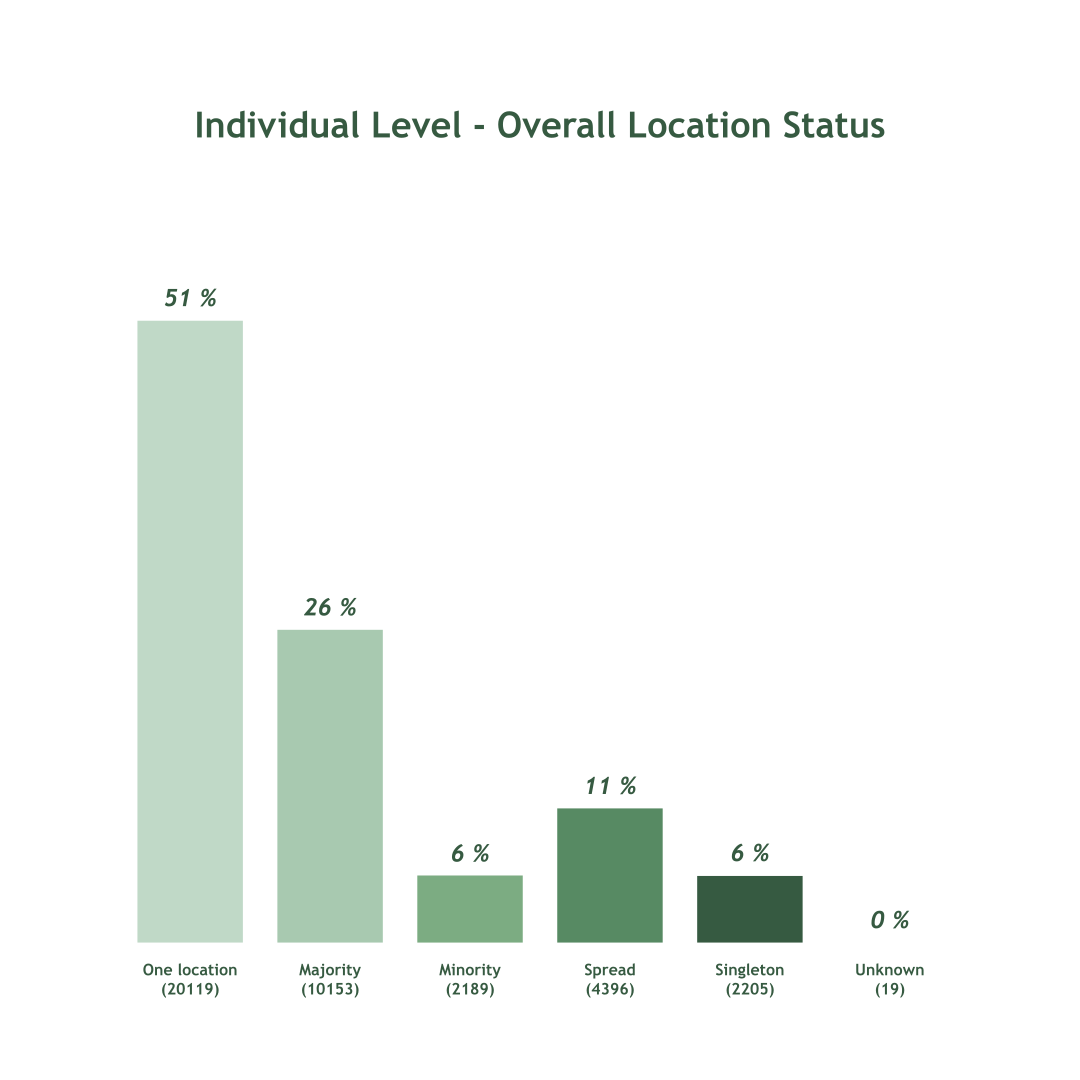
Figure 1. Team spread is mainstream
Almost half of employees in the dataset are not part of a one-location team.
This matters because leadership practices built for fully co-located teams only reflect part of today’s reality.
Do Employees in One-location Teams have Higher Engagement?
Not automatically.
We compared engagement and key engagement drivers across employees in different team setups:
-
employees in one-location teams
-
employees who sit with the majority of their team
-
employees who sit with a minority of their team
-
employees in evenly spread teams
-
employees who are alone at their location
If proximity mattered most, one-location teams should score highest. They do not. And that holds even when we account for industry, demographics, and region. Geography alone does not explain engagement. Once you stop treating location as the answer, you can focus on what leaders can actually change.
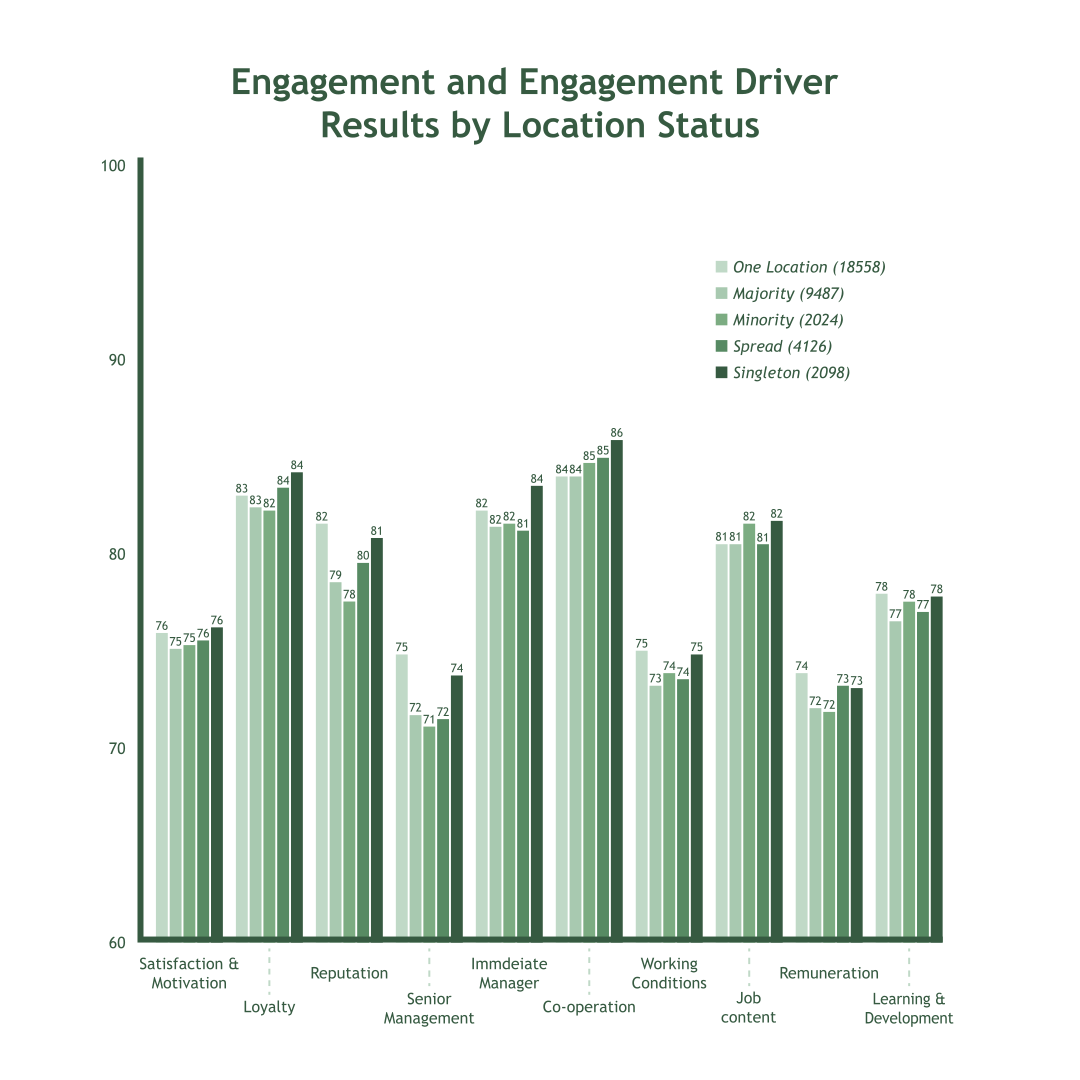
Figure 2. One-location teams are not automatically ahead
Engagement and engagement drivers do not follow a simple proximity pattern across team setups.
The pattern is more nuanced than many leaders expect. Geography alone is not enough to explain the employee experience.
What About Employees who work Alone at Their Location?
Here's where it gets surprising.
Employees who are alone at their location often score very well. In several areas, they even score highest, including on overall engagement.
That does not mean isolation is the ideal setup.
It means something else.
Being physically alone is not the same as being disconnected. And being surrounded by colleagues is not the same as having a strong employee experience.
Engagement is shaped by more than distance. It is influenced by how work is organized, how clear expectations are, and whether people have what they need to do their job well. The data tells you where the friction is. Follow-up is what actually fixes it.
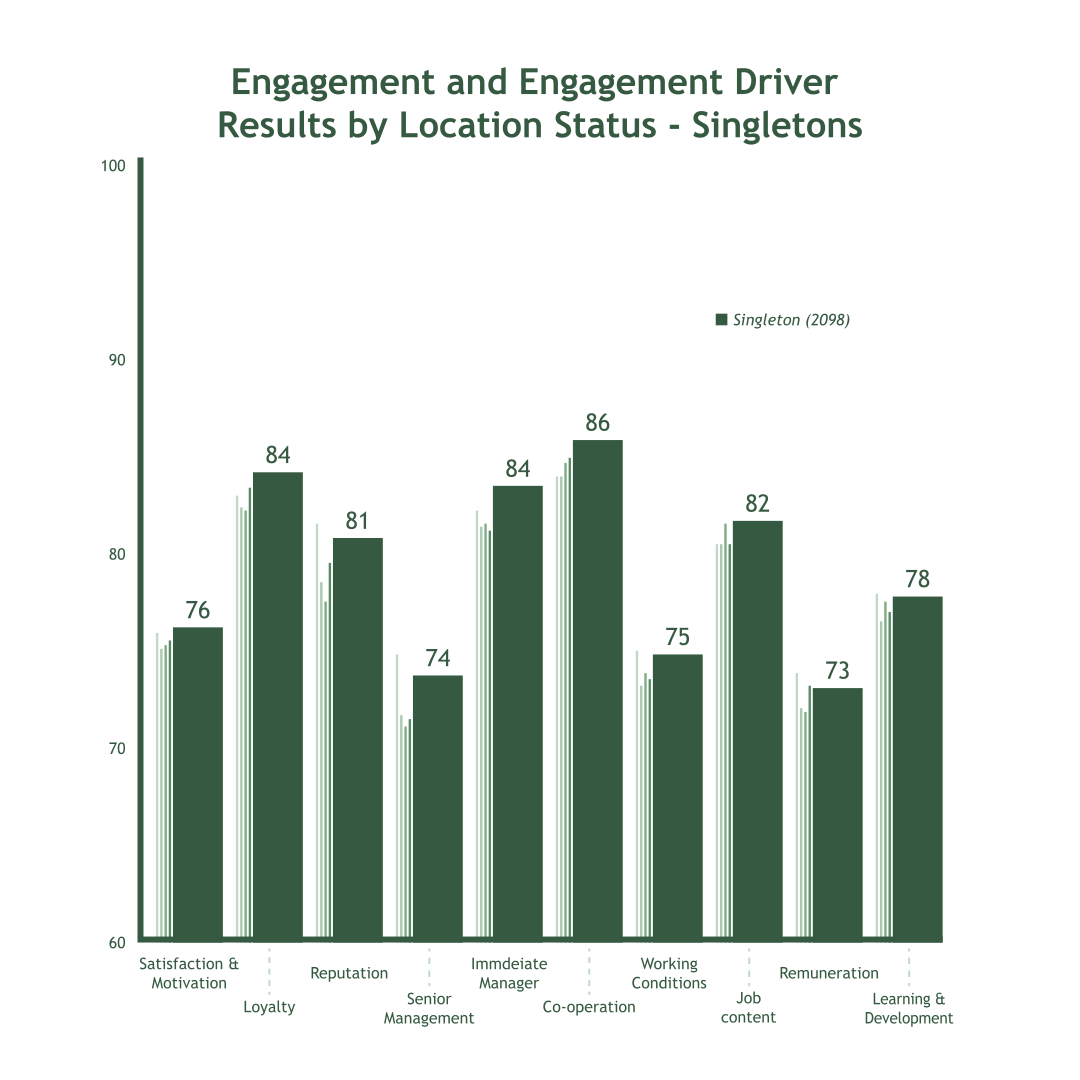
Figure 3. A surprising result: employees who work alone (singletons) often score strongly.
They do not automatically score lower. In several areas, they score very well.
This is not an argument for isolation. It is a reminder that physical distance is a poor shortcut for understanding engagement.
Does Sitting near your Manager Improve Engagement?
No. At least not in a consistent way.
We looked at whether employees score higher when they sit at the same location as their manager. They do not. Not systematically.
Once we account for organizational and demographic differences, manager proximity does not consistently improve engagement. In some cases, the pattern even moves in the opposite direction.
That reinforces an important point:
Leadership quality matters more than leadership proximity.
A manager does not become effective just because they sit nearby. What matters is whether they create direction, follow up on issues, support collaboration, and help the team move forward.
Good leadership travels. Poor leadership does too.
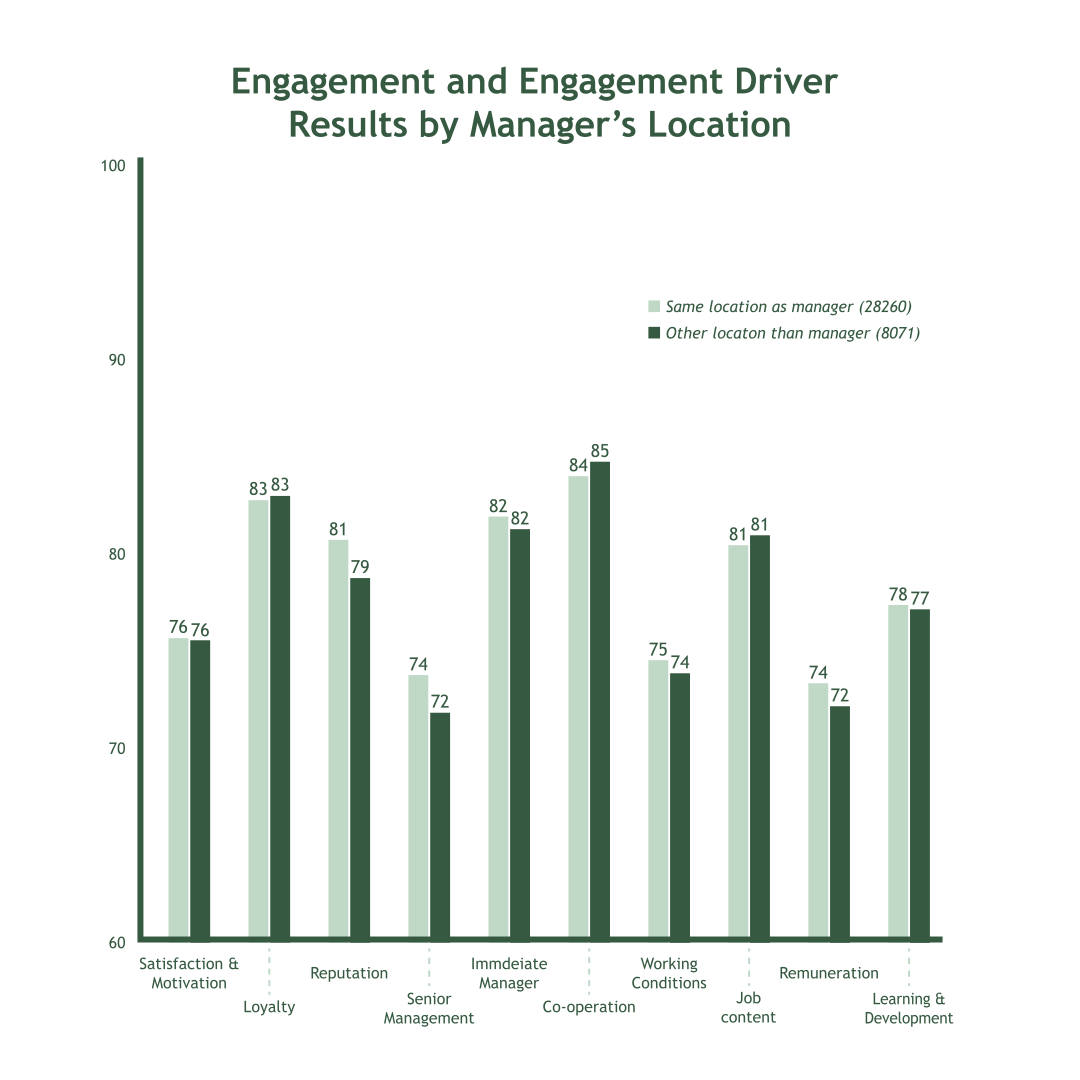
Figure 4. Sitting near your manager is not a reliable engagement lever
Manager proximity does not systematically translate into stronger engagement.
What matters more is whether leaders create clarity, follow up well, and help teams move forward.
What Should Leaders do with this Insight?
The data does not point to one perfect setup. It points to better questions.
Instead of asking whether people sit together, start asking:
-
Which team setups do we actually have?
-
Where do we see stronger or weaker engagement?
-
Are some groups, locations, or reporting lines doing better than others?
-
Do our leaders know how to respond to the needs of different team realities?
The challenge is rarely the survey itself. It is understanding what the data is really saying, where the pressure points are, and how leaders can turn insight into progress

Want to Turn Employee Feedback Into Better Action?
Knowing where your teams sit is only the start. Learn how to identify where attention is needed, turn feedback into focused follow-up, and help leaders act where it matters most.
Proximity is not the Answer. Intentional Leadership is.
If there is one takeaway from this analysis, it is this:
Physical closeness does not guarantee stronger engagement.
Some co-located teams do well. Some do not. Some distributed teams struggle. Others thrive. Employees who work alone can score the highest of all, when the conditions around them are right.
The question is not whether everyone sits together.
It is whether your organization understands the realities your teams work in, and acts on them. That is where better employee experience work begins. Not with assumptions about location, but with data, dialogue, and follow-up that helps leaders respond where it actually matters.
About the data
This analysis is based on:
-
20 organizations
-
8 industries
-
45,934 respondents in the dataset
-
42,988 survey responses
-
white-collar employees only
-
managers excluded in the team spread analyses
Get in touch with usStop Guessing. Start Listening.
This article shows what proximity can't tell you. On-Demand HR Surveys can. Track how your people actually experience hybrid work across teams, locations, and time. Keep leadership grounded in real insight, not assumptions.
|