

Employee Experience: From Feedback to Measurable Impact
Employee experience shapes how people feel, perform, and grow at work.
From onboarding to everyday interactions, every stage of the employee journey influences engagement, retention, and performance.
 Understand what shapes employee engagement and retention
Measure what matters across the employee journey
Turn employee insights into action and lasting improvement

Content
- What is Employee Experience
- Why Employee Experience Matters
- Understanding the Employee Journey
- The Key Drivers of Employee Experience
- How to measure Employee Experience
- Employee Experience Surveys
- Turning Feedback into Action
- Building an Employee Experience Strategy
- How to Improve Employee Experience
What is Employee Experience?
Employee experience (EX) is the overall experience employees have with an organization throughout their working lives. It encompasses every interaction, process, and working condition that shapes how people feel about their workplace, from recruitment and onboarding to everyday work, career development, and exit.
Employee experience goes beyond individual moments. It is shaped by the entire employee journey, including how employees experience leadership, collaboration, communication, technology, and the organization's culture.
While employee experience describes what people encounter at work, employee satisfaction reflects how content they are with their job, and employee engagement captures how motivated, connected, and committed they feel. Understanding the differences between these concepts helps organizations look beyond satisfaction and engagement scores to identify the experiences that need attention.
Improving employee experience starts with understanding these experiences, identifying what matters most to employees, and making meaningful changes that support both people and organizational performance.
Why Employee Experience Matters
Employee experience is more than an HR priority. It influences how people engage with their work, whether they choose to stay, and how effectively organizations perform. When employees feel supported, have the right conditions to succeed, and trust their leaders, organizations are better positioned to build committed teams and deliver consistent results.
The business value of employee experience becomes clear across three important areas:
1
Stronger Employee Engagement and Retention
Positive workplace experiences help employees feel valued, motivated, and connected to their organization. When people experience meaningful work, supportive leadership, and opportunities to grow, they have more reasons to stay and contribute.
Understanding what drives employee engagement helps organizations identify potential challenges early and focus improvements where they matter most.
2
Better Performance and Business Outcomes
Employee experience shapes how effectively people work. Clear expectations, supportive leadership, strong collaboration, and the right tools help employees perform at their best.
These conditions can also improve productivity, customer interactions, and service quality, connecting employee experience to broader business outcomes.
3
A Stronger and More Resilient Organization
A positive employee experience helps build trust, collaboration, and a shared sense of direction, particularly during periods of organizational change.
By strengthening organizational culture and prioritizing employee well-being, organizations can create healthier working environments where employees feel supported and better equipped to navigate change.
Understanding the Employee Journey
Employee experience isn't created at a single point in time. It develops throughout the employee journey, from recruitment and onboarding to everyday work, development, career transitions, and exit.
Each stage brings different expectations, interactions, and opportunities to shape how employees experience the organization.

Focus on the Moments That Matter
Not every interaction has the same impact. Certain moments that matter, such as starting a new job, changing managers, receiving a promotion, or returning from leave, can strongly influence how employees feel about their workplace.
When these moments are handled well, they build trust, engagement, and connection. When they fall short, they can create frustration and weaken the overall employee experience.
Understanding these moments helps HR and leaders identify where employees need more support and where improvements can make the greatest difference.
By collecting feedback at key milestones through an Employee Lifecycle Survey, organizations can uncover friction, identify opportunities, and take targeted action to improve the employee journey.
The 4 Key Drivers of Employee Experience
Employee experience is shaped by many things, but four drivers do the heavy lifting in most organizations. Get these right, and the rest gets easier. Get them wrong, and even the best perks won't compensate.
- 01 Leadership
- 02 Culture
- 03 Work Environment
- 04 Technology
Employee Experience Driver #1: Leadership
Direction, trust, psychological safety, communication, accountability, and follow-up. Leaders set the tone for what's expected and what's possible. When leadership is clear and consistent, people know where they stand.
When it isn't, people fill the silence with assumptions (usually the worst ones).
Employee Experience Driver #2: Culture
Shared norms, values, collaboration, inclusion, recognition, and ways of working.Culture isn't what's written in the handbook. It's what people see rewarded, what gets ignored, and how decisions are actually made.
Strong culture creates belonging and alignment. Weak culture creates confusion and inconsistency.
Employee Experience Driver #3: Work Environment
The physical, social, and organizational conditions that shape daily work.It includes workload, collaboration, team dynamics, flexibility, and whether people have the support they need to succeed.
Employee Experience Driver #4: Technology
Tools, systems, and digital workflows that support or block employees and managers.The wrong tech can erode experience faster than almost anything else, because it's there every single day.
The right tech does the opposite: it removes friction instead of creating it.
How to Measure Employee Experience
Employee experience is measured across the employee journey, not through a single score. The goal isn't just to collect feedback.
It's to understand where experience is strong, where it breaks down, and where action will have the greatest impact.
Where you Measure
Measure at the moments that matter across the employee journey, including onboarding, manager transitions, development, and exit.
Different moments reveal different challenges, which is why a single annual survey rarely tells the full story.
What you Measure
Use a mix of quantitative metrics and qualitative feedback. Two metrics carry most of the weight in:
- eNPS (Employee Net Promoter Score)
- Engagement Score
Together, they help explain both sentiment and commitment.
How you Measure
Measure consistently enough to compare across teams, regions, and time, but flexibly enough for local managers to act on the results. The strongest EX programs balance shared direction with local ownership. And they treat measurement as a starting point for action, not an end goal.
Where you Measure
Measure at the moments that matter across the employee journey, including onboarding, manager transitions, development, and exit. Different moments reveal different challenges, which is why a single annual survey rarely tells the full story.
What you Measure
Use a mix of quantitative metrics and qualitative feedback. Two metrics carry most of the weight in:
- eNPS (Employee Net Promoter Score)
- Engagement Score
Together, they help explain both sentiment and commitment.
How you Measure
Measure consistently enough to compare across teams, regions, and time, but flexibly enough for local managers to act on the results. The strongest EX programs balance shared direction with local ownership. And they treat measurement as a starting point for action, not an end goal.
Employee Experience Surveys
Employee surveys help organizations understand how people experience their workplace, what drives engagement, and where improvements are needed.
But different surveys serve different purposes. Combining broad engagement measurement with targeted feedback throughout the employee journey provides a more complete understanding of employee experience.
Four Survey Types That Support Employee Experience Programs
Engagement Surveys
Engagement surveys measure employees' motivation and commitment alongside the factors that influence them, such as leadership, recognition, development, and trust.
Typically conducted once or twice a year, an Employee Engagement Survey establishes a consistent baseline, highlights strengths and challenges, and helps organizations prioritize meaningful improvements.
Pulse Surveys
Pulse surveys are short, focused check-ins used between larger engagement surveys. They help organizations track specific themes, follow up on areas needing attention, and assess whether previous actions are making a difference.
Used alongside broader measurement, Pulse Surveys keep employee feedback connected to ongoing improvement.
Employee Lifecycle Survey
Employee lifecycle surveys capture feedback at key moments, including onboarding, role changes, manager transitions, development, and exit.
An Employee Lifecycle Survey complements broader engagement measurement by revealing how specific moments shape the employee experience and where improvements are needed throughout the employee journey.
360° and Leadership Feedback
A Leadership Development Survey gathers feedback on leadership behavior from multiple perspectives, including employees, peers, and managers.
It helps leaders understand how their behavior is experienced by others, identify strengths and development opportunities, and focus their efforts where they can make the greatest difference.
From Feedback to Action
Collecting employee feedback is only the beginning. The real challenge is turning insights into meaningful improvements. When employees share their experiences but see little response, trust in the process can weaken, and future feedback becomes less valuable.
Turning feedback into action requires clear priorities, meaningful conversations, and consistent follow-up that employees can see and experience.
Why Employee Surveys Fail to Drive Change
Even a well-designed employee survey can fall short if the organization lacks a clear approach to what happens next. Five common barriers prevent valuable insights from becoming meaningful improvements.
The Data Lands Without a Plan
Results are shared, dashboards are updated, but no one is clear on what to prioritize, who should act, or what happens next.
Managers get Insight, but not Enough Direction
Scores and dashboards are not enough. Managers need guidance to interpret results, understand what matters most, and turn feedback into productive team conversations.
Senior Leaders do not set Clear Priorities
Without clear direction from leadership, teams risk spreading their efforts across too many initiatives instead of focusing on the improvements that matter most.
Local Context Gets Lost
Organization-wide results can hide important differences between teams, functions, and markets. Effective follow-up requires understanding the challenges and opportunities within each team.
Follow-up Disappears
Employees share their feedback but hear little about what happens afterward. Without visible progress or communication, confidence in future surveys can decline.
When these barriers persist, employee surveys become a recurring exercise rather than a driver of improvement. Addressing them requires clear ownership, focused priorities, and a consistent approach to follow-up.
What It Takes to Turn Feedback Into Action
Turning feedback into action requires more than surveys and dashboards.
It requires clear ownership, manager support, leadership accountability, and visible follow-up.
Five of Those Conditions Matter Most
A clear process for how feedback moves from collection to decision to follow-up. Who reviews what, when, and with which mandate to act. Without governance, even good intentions get lost in calendars.
Someone must own what happens next. HR owns the process. Leaders own the priorities. Managers own the dialogue. Without clear ownership, action stalls.
Managers play a key role in employee experience. They need more than a report: they need a clear understanding of what the data means, where they can make the biggest impact, and how to turn feedback into team dialogue and action.
Senior leaders set the tone for whether feedback matters. When they engage with the results, choose priorities, and follow up publicly, the organization listens. When they don't, the rest of the system stalls.
People don't expect everything to be solved. They expect to know that they were heard, what's being done, and what they should expect next. Communicating action (even small action) is what rebuilds trust between rounds of feedback.
The Shift from Feedback to Action
Most organizations are good at listening. What they struggle with is what happens next.
The strongest employee experience programs make a deliberate shift:
- From reporting on feedback to acting on it
- From measuring engagement to improving it
- From "we ran the survey" to "we changed something because of it"
That's when employee experience stops being an HR exercise and starts becoming a driver of organizational performance.
How Do You Build an Employee Experience Strategy?
Knowing what employee experience is and why it matters is one thing. Building a strategy that changes how people experience work is another.
A strong employee experience strategy is a clear plan for how your organization will measure, improve, and continuously manage employee experience over time.
A Simple Framework for a Strong Employee Experience Strategy
Most successful employee experience strategies follow the same basic logic: understand the current experience, decide where to focus, and create a plan for turning insight into action.
-
Where you are
A clear baseline of how people currently experience the organization, where the strongest moments live, and where the biggest gaps are. -
Where you're going
A small set of priorities that match the business strategy, the cultural ambition, and the organizational realities employees are experiencing right now. Not a list of everything, but the few things that matter most. - How you'll get there
The roadmap, the ownership model, and the rhythm of measurement, action, and follow-up that turn the strategy into something people experience in their daily work.
How Ennova Supports Your Strategy
Ennova helps enterprise organizations build employee experience strategies that work across markets, business units, and cultures.
We combine measurement, benchmarking, manager enablement, and advisory support to help organizations turn feedback into action.
We don't run your strategy for you. We help your organization run it better.
Why Ennova:
✓ Closed-loop Employee Impact Platform.
✓ AI-driven insights.
✓ Human expertise.
✓ Structured transformation programs.
How Do You Improve Employee Experience?
Improving employee experience isn't about adding more programs. Most organizations already have plenty of those. Instead, the goal is to do fewer things better, in the places where it actually counts.
Four Principles Guide the Strongest Improvement Work:
Identify the Real Problem Before Solving it
Equip Managers to act on Feedback
Improve the Moments with the Highest Impact
Remove Barriers that Make Work Harder
Employees don't expect every issue to be solved. They expect visibility, progress, and communication. That's what turns feedback into improvement and makes future feedback worth giving.
What is an Employee Experience Platform?
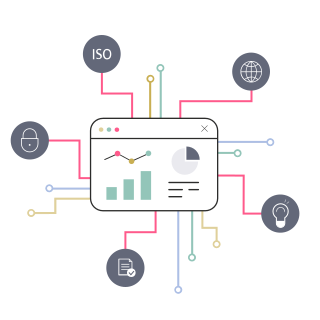
An Employee Experience Platform is the system that holds the whole thing together. It collects feedback across the employee journey, turns it into insight and helps HR, leaders, and managers turn insight into action. A survey tool gives you a questionnaire and a dashboard. Enterprise employee experience platforms do more than collect feedback. They support continuous listening, prioritization, action, and follow-through across the full employee journey.
Put simply: a survey tells you something. A platform (whether you call it an EX platform or an employee feedback platform) helps you do something about
What to Look for in an Employee Experience Platform
Not every platform fits every organization, and not all employee experience tools are built for enterprise scale.
But the strongest setups share a few qualities:
Coverage across the journey
The strongest employee experience solutions cover the full lifecycle, not just an annual engagement survey: onboarding, pulse, leadership feedback, exit, and the moments in between
Insight that managers can actually use
Clear team-level views, smart recommendations, and the ability to filter data by team, market, or function without needing a data analyst.
Built for action, not just reporting
Tools that support action planning, follow-up, and visible communication after feedback, not just a dashboard that lights up once a year.
Enterprise-ready
The security, compliance, accessibility, and integrations that make it fit into the rest of your organization (Workday, SAP, Azure AD, and the like). For most large organizations, certifications like ISO 27001, SOC 2, GDPR, and WCAG 2.2 are non-negotiable.
Thoughtful use of AI
AI should help people work faster and smarter without replacing human judgement or creating a black box. At Ennova, we use Thoughtful AI to support text analysis, smart recommendations, and trend detection with transparency about how the technology works.
Ennova’s People Impact Platform
Ennova's People Impact Platform is built for exactly this. It is EX software that supports the full employee journey, from engagement and pulse tolifecycle and leadership feedback. It's designed to give managers usable insight, not just data. It includes the AI, analytics, integrations, and security that enterprise organizations require. And it's backed by 30+ years of EX experience, global benchmarks, and the advisory and follow-through that turn measurement into change.
Because the platform isn't the point. What people experience at work is.
The strongest organizations do not just measure employee experience. They measure it across the journey, focus on the moments that matter, and turn feedback into action that changes how work feels. That is what Ennova helps enterprise organizations do.
FAQ About Employee Experience
Employee experience (EX) is the sum of how a person experiences your organization across their working life: Every interaction, decision, system, and moment from the day they first hear of you to the day they leave. It includes the big things, like a promotion or a new manager, and the small things, like whether the right tools work on a Monday morning.
Employee experience directly shapes retention, engagement, performance, culture, customer experience, and innovation. Strong EX leads to measurable business gains. Weak EX leads to costly turnover, reduced performance, and a weakened employer brand. Most of those costs don't show up on a single line in a budget.
Employee experience is the broader system: the culture, leadership, processes, and daily moments that shape work. Employee engagement is one of the most important outputs of that system: the emotional commitment people develop when their experience is strong. EX is the input. Engagement is one output.
The employee journey is the path a person takes through your organization, from first hearing about you to leaving (and sometimes beyond). It includes broad stages like onboarding, daily work, development, and exit, with dozens of subjourneys and hundreds of touchpoints inside them. The most important touchpoints are called "moments that matter”.
The most critical touchpoints include recruitment, onboarding, the first weeks with a new manager, development conversations, role changes, promotions, performance reviews, returns from leave, and exit. Each is a "moment that matters": a point where people form lasting impressions about whether the organization is a place worth investing in.
Four drivers do most of the heavy lifting in employee experience: leadership (direction, trust, communication), culture (norms, values, recognition, ways of working), work environment (physical, social, and organizational conditions), and technology (tools, systems, and digital friction). These drivers reinforce each other, improving one alone rarely creates lasting change.
Psychological safety (the feeling of being able to speak up, raise concerns, and share ideas without fear) is a foundational element of strong employee experience. It influences trust in leadership, team collaboration, innovation, and belonging. When it's missing, people disengage quietly long before they leave. When it's present, the rest of the EX system can actually work.
eNPS, or Employee Net Promoter Score, measures whether employees would recommend your organization as a place to work. It's a simple, comparable signal that's easy to track over time, but it works best when used alongside deeper measures like an Engagement Score.
No. While HR typically owns the framework, listening setup, and measurement, employee experience is shaped by everyone in the organization. Senior leaders set strategic priorities and accountability. Managers own the local dialogue and the day-to-day experience their teams have. Employees themselves contribute by giving honest feedback. EX works best when ownership is genuinely shared.
Turn Employee Experience Into Measurable ImpactWe are Empowering.
See how Ennova helps you listen, understand, decide, act, and improve.